Armenian Handwritten Font for Crafters & Sellers
If you’ve ever spent hours tweaking a label, adjusting letter spacing on a wedding welcome sign, or testing how a font cuts on your Cricut—only to find it’s too delicate, too thin, or just doesn’t hold up at small sizes—you’ll understand why Armenian feels like a quiet revelation. This isn’t just another script font. It’s a bold, confident handwritten typeface built for real-world making—not just mockups.
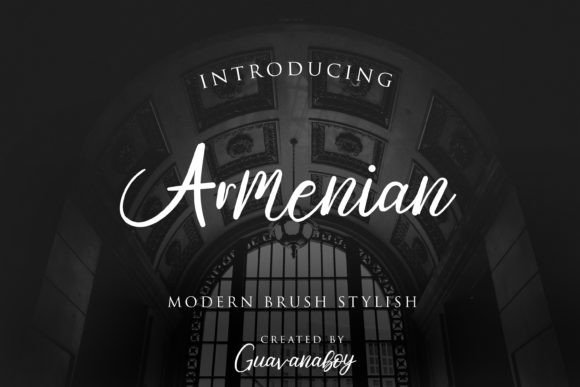
Armenian reads as strong and dynamic, with generous stroke contrast and intentional imperfections that give it warmth without sacrificing clarity. Its nostalgic charm comes from the way it balances control and spontaneity: each letter feels hand-drawn, but never shaky or hard to read. That balance is rare—and essential—when you’re designing something people will hold, stick on a candle jar, or hang in their living room.
Where Armenian Shines in Physical & Digital Craft Projects
Because Armenian is designed as a display font—not meant for paragraphs—it excels where impact matters most: short, high-visibility text. Think product names on boutique tags, shop signage, greeting card headlines, or SVG-cut vinyl decals for mugs and tote bags. Its bold weight holds up beautifully at 16pt on a 2” sticker, and its confident rhythm keeps names and titles legible even when scaled down to 12pt on a mini gift tag.
Here’s how I use Armenian across my own shop:
- Candle & soap labels: Armenian gives handmade bath products instant sophistication—especially paired with a clean sans serif for ingredients or scent notes.
- Wedding stationery: “Mr. & Mrs.” on a welcome board, monogrammed napkin prints, or foil-stamped invitation headers—all gain elegance and personality without looking fussy.
- Farmhouse-style signs: “Gather,” “Home,” or seasonal phrases like “Pumpkin Spice & Everything Nice” cut cleanly on wood or acrylic thanks to Armenian’s open counters and sturdy terminals.
- Digital printables: Planner cover pages, printable wall art, and habit trackers get an elevated, personal feel—without needing illustration or extra design layers.
- Holiday packaging: From “Handmade with Love” on holiday cookie boxes to “Merry & Bright” on gift tags, Armenian adds warmth and intentionality that mass-produced fonts miss.
Readability Tips You’ll Actually Use
Armenian works best at sizes 14pt and up for printed cards and labels—and at 20pt+ for vinyl cutting or laser engraving. For small stickers (under 1.5”), I always test the uppercase “A”, “R”, and “N”: they’re the most structurally revealing letters. Armenian passes this test easily—their forms are distinct, spaced generously, and lack fragile serifs or ultra-thin entry/exit strokes that might break during cutting or printing.
On screen previews—especially in Canva, Silhouette Studio, or Cricut Design Space—I recommend viewing Armenian at 100% zoom before finalizing. Its confidence comes through best when you see the full rhythm of connected letters, not just isolated characters. And if you’re layering it over photos or textured backgrounds (like kraft paper mockups), keep contrast high—Armenian’s boldness shines brightest against light or neutral backdrops.
Smart Pairings That Make Your Designs Feel Intentional
Armenian thrives when grounded by contrast. I pair it almost exclusively with clean, neutral typefaces—never another script. A modern sans serif like Montserrat, Inter, or Poppins provides perfect balance: Armenian brings the voice, the other font brings the clarity. For example:
- A wedding invitation header in Armenian + body text in Lora (a gentle serif) = timeless but fresh.
- A candle label with “Lavender Fields” in Armenian + “Soy Wax • Hand-Poured • Made in Oregon” in Open Sans = artisan credibility with zero clutter.
- An SVG mug design using Armenian for “Good Vibes Only” + a tiny sans serif copyright line underneath = professional, scalable, and shop-ready.
Script Amp fonts like Armenian are intentionally crafted for this kind of pairing—they’re expressive enough to stand alone, but restrained enough to avoid overwhelming supporting text.
Licensing, Files, and Real-World Practicalities
Armenian comes with OTF and TTF files, plus bonus stylistic alternates and swashes—useful for customizing “The” or “&” in logos or monograms. It supports multilingual Latin-based languages (including accents for French, Spanish, and German), which matters if you sell internationally or create bilingual baby announcements or holiday cards.
Crucially, Armenian includes a commercial license that covers physical product sales—so yes, you can use it on labels, stickers, apparel, and digital downloads you sell on Etsy or your own site. It also covers client work and templates you license to other makers. Just remember: you may not resell or redistribute the font files themselves. That’s standard, fair, and protects the designer’s craft—just like your own patterns or SVG bundles.
As a small shop owner who ships hundreds of handmade items yearly, I choose fonts not just for beauty—but for reliability across materials, machines, and customer expectations. Armenian delivers both. It makes my products feel more considered, my brand more cohesive, and my time behind the computer a little lighter—because fewer tweaks mean more time creating, packaging, and connecting with customers.
When your typography quietly signals quality—before someone even reads the words—that’s when a font stops being decoration and starts being part of your product’s story. Armenian does that. Consistently.